Together, we shape spaces that respond, to where you are, and how you live.
Inspace is my residential building design practice, based in Beechworth and Yackandandah. I design new homes and renovations, and do heritage investigation and design, across North East Victoria, including Myrtleford, Chiltern, Wangaratta and Albury-Wodonga. I also work in Shepparton, Dinner Plain and coastal NSW. Design starts with your site. What it can support, what it offers, how it connects to everything around it. I want to understand how you’ll live there. What matters. What you’re working toward. From there, we shape something together that answers to both - to place and to the life you want
I’d love to hear what you’re planning, even if it’s early days
Thinking about a project?
A few houses worth showing
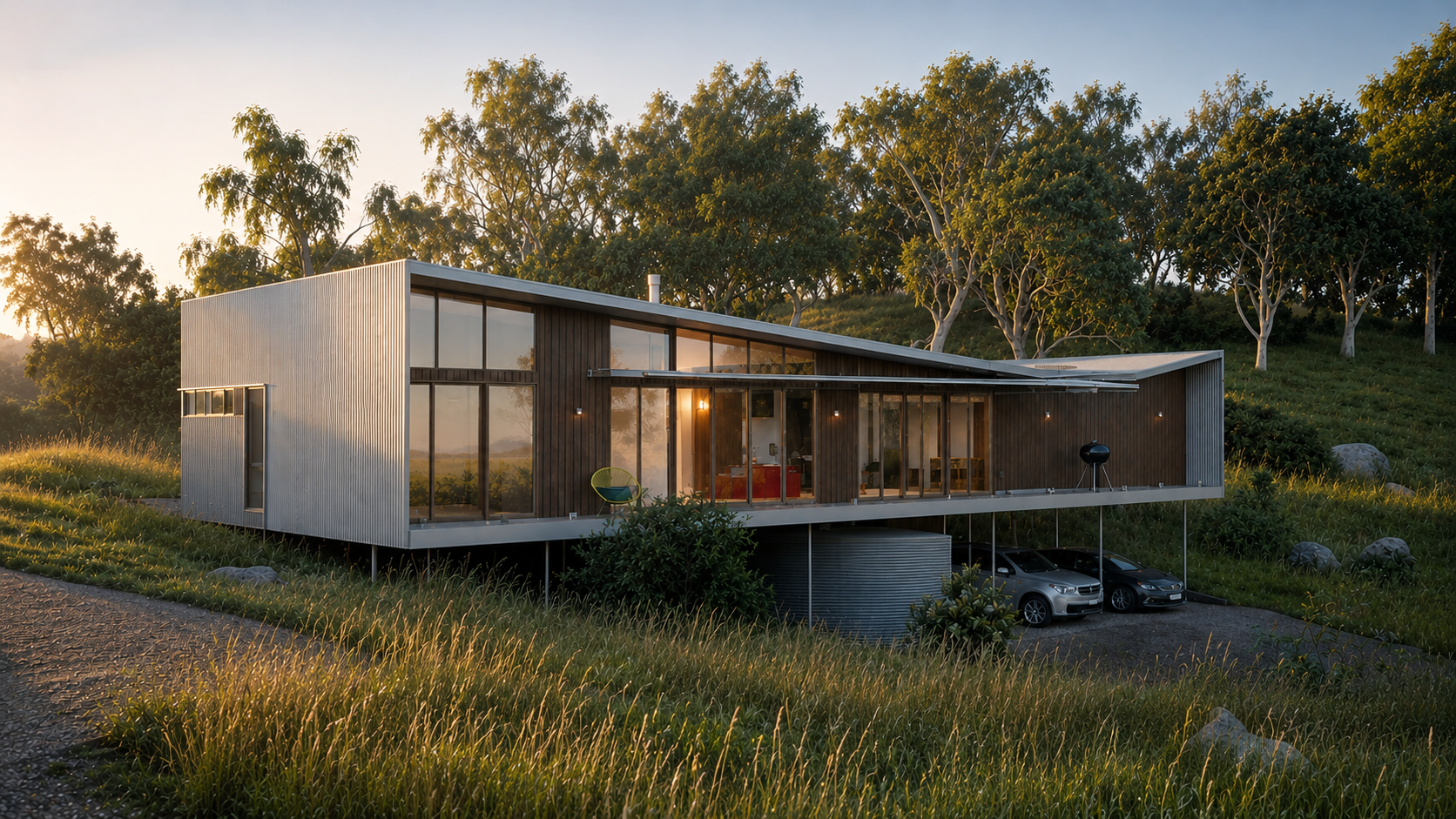
Yackandandah
The site is a gully. The view across it is the whole reason to be there. I lifted the floor and extended the line of the house until the valley could come in on its own terms. There was the practicality of water to think about as well. You are aware of being above the land before you are aware of anything else.
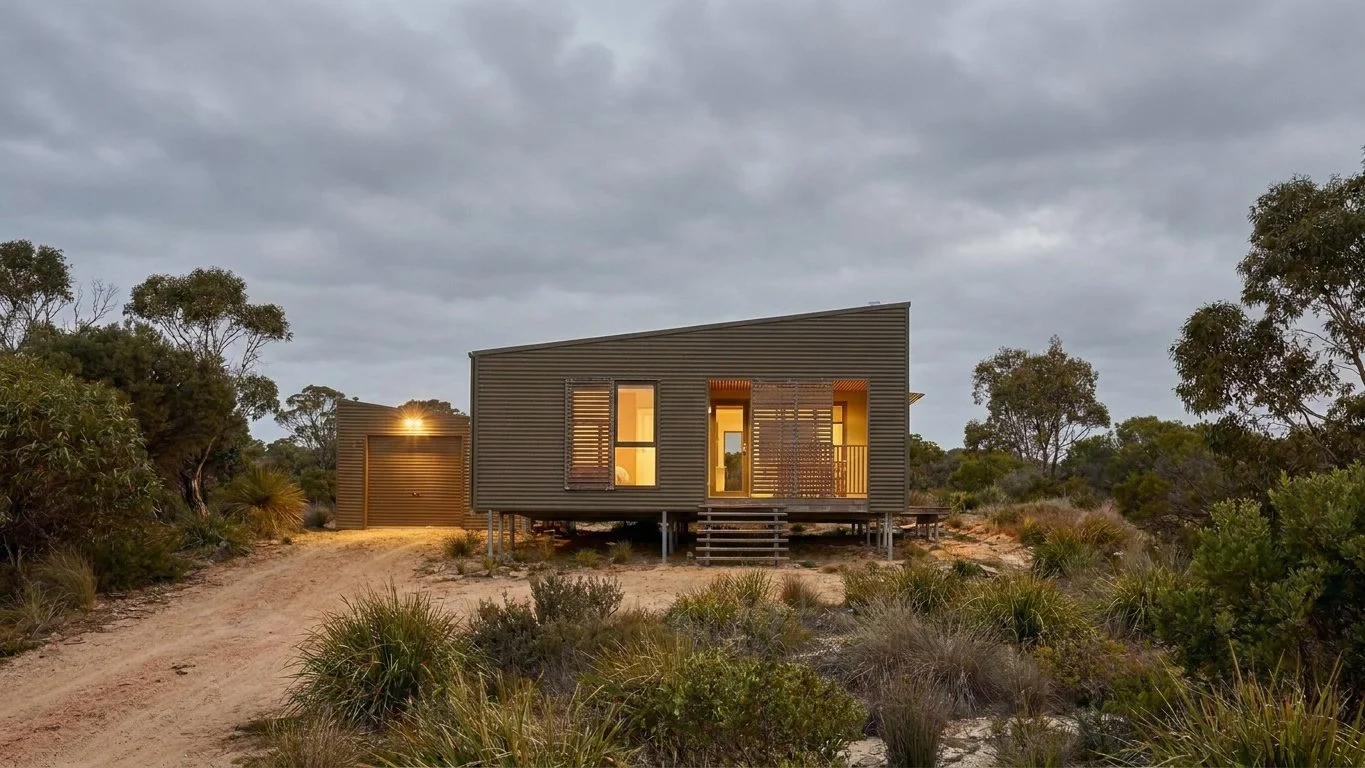
Kioloa
They had slept in a camper trailer on the block, elevated above the ground, and the kangaroos had come through each morning without noticing them. The kids remembered it. So did the adults. The brief that followed was not complicated: a house that kept that feeling. Elevated, open, somewhere to have your coffee and watch without interrupting anything.
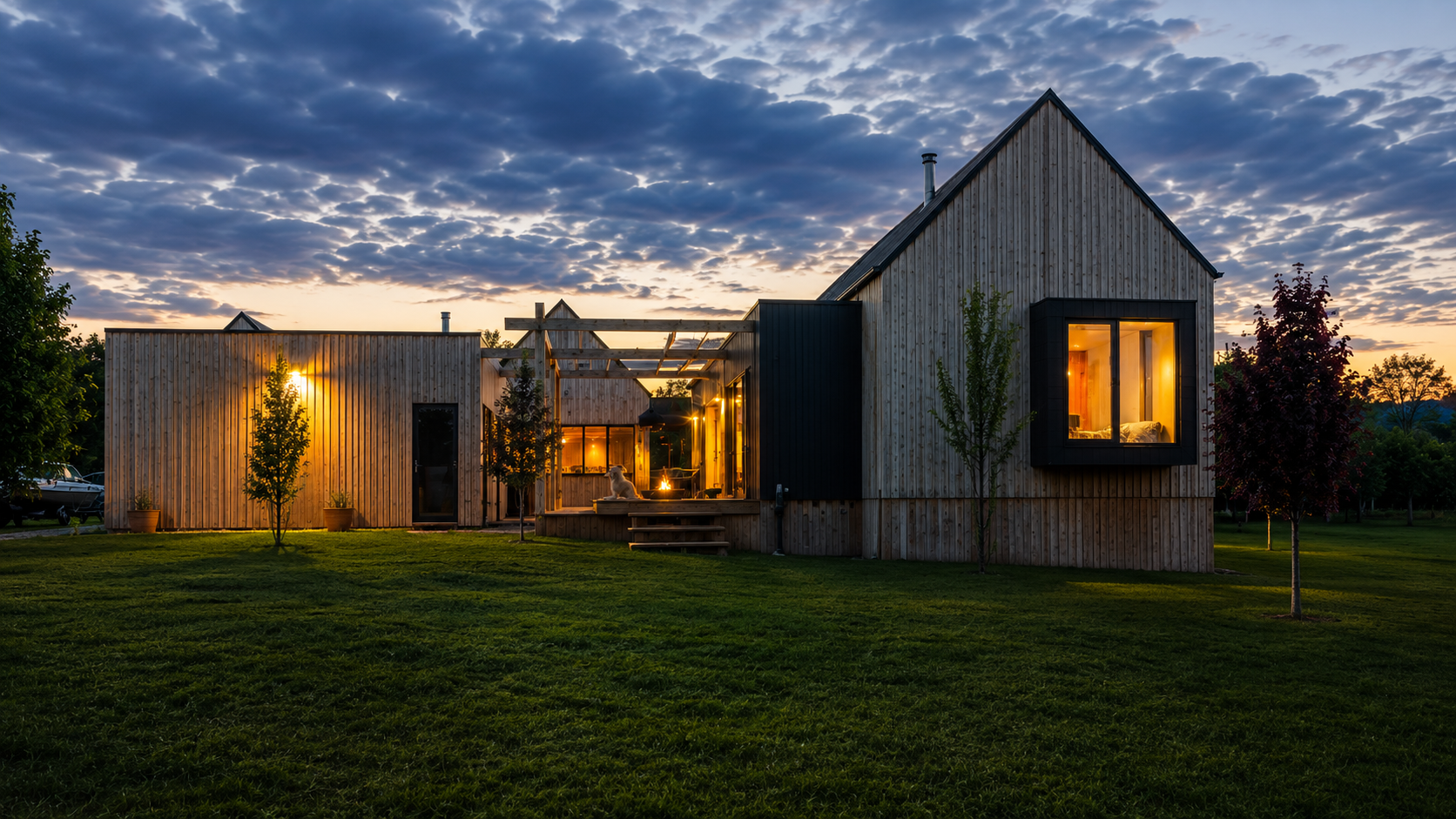
Yackandandah
Farm buildings accumulate more than arrive. A shed here, a lean-to there, each one added when it was needed. That logic guided this one. Four pavilions with courtyards between them, raised above the paddock, organised the way things are when nobody has been trying too hard. Timber and corrugated steel tie it to the past without nostalgia.
An approach shaped by listening
I begin by listening to how you want to live. Not the number of bedrooms or the style of the house, but how you'll actually use it. Your daily routines. What you need space for. What hasn't worked in the places you've lived before. That understanding shapes everything that follows.
Then I look at what your site will allow. The design has to fit the site, the budget, and the regulations. It also has to fit you. When those things don't align, we work through it together. That means decisions and adjustments. Sometimes difficult conversations. I've found that people would rather know early than discover limitations halfway through.
I've worked with regional councils for years. I understand how planning schemes and building codes are applied in practice. What bushfire overlays require. How heritage controls shape decisions. Where flexibility exists. That experience means I can tell you what's worth pursuing and what will cost more than it returns. The design develops with constraints in mind from the start, so there are no surprises later.
The design moves through stages, from understanding what you need and what the site allows, to developing the design, to producing documents for approvals and construction. At each stage, you'll see the thinking as it happens, not just the outcome. Decisions get tested and adjusted as things develop. This is your home. You should understand how it came to be the way it is.
Gathering Stage
I visit the site to understand its orientation, slope, access, and constraints. I review the planning scheme to identify overlays, setbacks, and controls that will shape what can be built. And I ask questions about how they live: how many people, what rooms matter most, what works in their current house and what does not.
This information helps inform the brief. Not as a list of rooms or features, but as an understanding of what the house needs to do and what conditions it needs to work within. That clarity matters. It allows the design to develop with purpose rather than accumulating without direction.
Imagining Stage
Sketches and drawings test how the brief can fit the site. They show where the house might sit, how rooms could be arranged, and how the building could respond to orientation, slope, and access. These are not final designs but options, tested against the brief, the budget, and the constraints identified earlier.
We discuss what works and what does not. Some directions get pursued, others set aside. The goal is to find an approach that addresses the site, fits the brief, and holds up under scrutiny.
Developing Stage
The chosen direction is developed into a resolved design. I refine floor plans to show room sizes, circulation, and spatial relationships. Elevations and sections show the building's form, roof pitch, and relationship to the ground. Materials, window sizes, and key details are determined.
The drawings become detailed enough to test the design against the brief and the budget. If something needs adjustment, it happens here.
Refining Stage
Technical drawings are produced for approvals and construction. Floor plans, elevations, sections, and details are drawn to scale with dimensions, materials, and construction notes. I coordinate with engineers, surveyors, and other consultants. Planning applications are prepared and submitted. I work with council and building surveyors, addressing requirements as they arise.
Once approvals are in place, the drawings go to builders for pricing. I answer questions and clarify details so the design can be built as intended.
Design isn’t just about form or space - it’s about understanding people, places and what really matters.
Not sure where to begin?
I can help clarify what’s possible…
A bit about me
I’m Peter Wood. I founded Inspace and live in Yackandandah, in north-eastern Victoria. I design homes here.
I’ve been doing this for nearly forty years. Residential projects, heritage work, teaching. I’ve built several homes myself. You learn different things when you’re the one building it. I hold a Master’s in Architecture and a Bachelor of Construction Management, but the building is what keeps my thinking honest.
I make furniture as well. That hands-on work keeps me connected to materials as a physical reality - how they feel, how they respond, what they can actually do.
These reflections extend the questions and observations that guide my projects.
Each month I post a field note, an observation, a thought from a site visit, or something that has caught my attention about design and how we live. In the newsletter I go a little deeper, sharing the background: the thinking behind it, the places involved, the practical realities, and the details that don’t always make it into the main note. If you’d like to receive it, leave your email here.
From past clients
I loved it straight away. The first sketch and 3D view just made sense—there was no need to see anything else.
Kate - Shoreham
It’s the first time we’ve felt truly understood in what we wanted to create. The design reflects that completely.
S and G - Beechworth
Some things worth knowing
-
Yes. I’m familiar with many regional councils and can help navigate overlays, planning applications, and bushfire or heritage requirements.
-
It depends on the scope of your project. I usually start with a conversation to understand your needs, then provide a clear outline of services and fees.
-
As early as possible — even before you buy a site or decide on the brief. Early conversations can help avoid false starts.
-
No.
-
It depends on the scope of your project - how long is a piece of string? A simple home might take 3-4 months from brief to documentation, while a more complex project could be 6-8 months. I'll give you realistic timeframes once I understand what you're planning.
-
Yes, I've worked across much of the state - from Apollo Bay to Horsham and places in between. While I'm based in regional Victoria, I'm happy to travel for the right project. Distance just means we might rely more on video calls during the early stages.
Thinking about a project?
Every project starts with a conversation.
I offer a short, 15-minute phone or video call, a chance to understand what you hope to do and to see whether we are a good fit. Before we speak, I usually send a brief guide outlining how I work and what to expect.
I take on only a small number of projects each year, so that every project can receive my full attention.
Phone: 03 5728 1843
Hours: Monday, Tuesday and Thursday, 9.00am - 4.00pm
If I miss your call, feel free to leave a message — or email instead.
Email: peter@inspace.net.au