Near where I live, there is a replica miner's hut. It was built around 2001 as an act of remembrance for the Centenary of Federation. For a time it was pristine. Timber sharp, joints clean, the whole thing finished and carefully resolved.
If you search for images of miners' huts online, this one appears again and again. It is usually shown as it was then, freshly built and neatly presented. It has come to stand in for the miner's hut as a visual idea, less a historical building than a settled image.
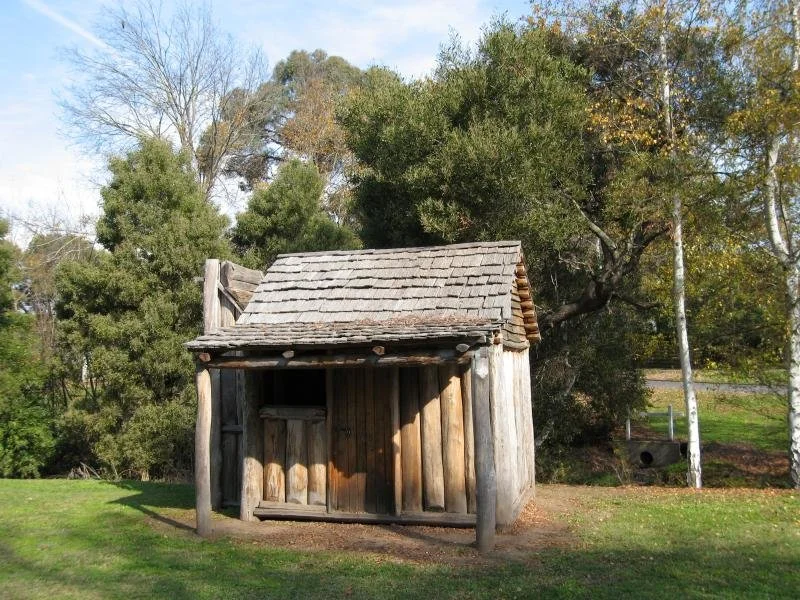
Replica miner’s hut shortly after construction in 2001. Built as a commemorative object, the building appears complete, resolved, and static.
Source: https://www.travelvictoria.com.au/yackandandah/photos/
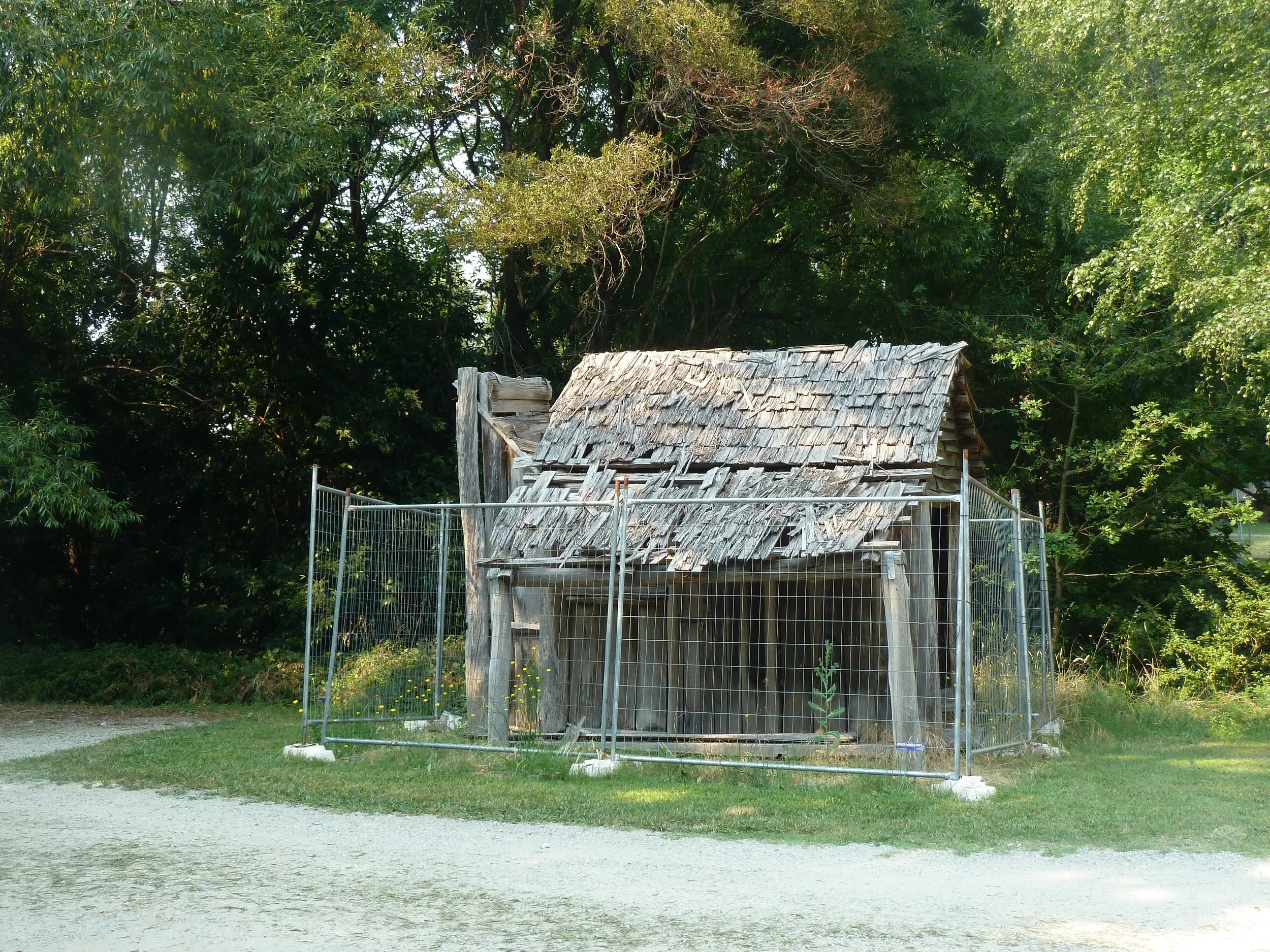
Replica miner’s hut in its current condition, weathered and fenced off, no longer maintained as a building.
Source: Author, January 2026
Now it sits behind construction fencing, weathered and unattended. That deterioration clarified something I had not quite articulated before. It made me wonder how realistic it ever was, and what it was meant to represent.
The hut presents itself as a form that arrived whole, stable and knowable. That impression aligns with a contemporary taste for resolved, picturesque buildings, the kind that read well at a glance. But when I look more closely at the historical record, a different picture emerges. On the goldfields, huts were often provisional. Some were little more than tents given walls. They were not intended to last. Houses came later, through occupation and incremental change, once people stayed.
What mattered was not the first structure, but what followed. Walls were thickened, fireplaces appeared, verandahs were added. The building changed because life required it to.
The replica never had that life. It was finished from the outset. It could be catalogued, admired, photographed, and reproduced as an image.
It has survived better as an image than as a building.
Standing there, I realised that my unease had less to do with accuracy than with process. The replica flattens a story that was always about becoming. It replaces a lived, provisional history with something closer to an aesthetic, familiar and easily consumed.
This small building led me back into a larger question about how miners' houses are remembered, simplified, and aestheticised over time. What follows is part of that longer reflection.