I had passed the house on the way to Chiltern's railway station, more than once, without stopping. It was only when I started reading the Fortunes of Richard Mahony trilogy that I went in. The trilogy follows a fictional man, though Richardson drew on her own memories and her family's life to write it.
Lake View stands opposite Lake Anderson. Richardson called it a lagoon. It was dry the day I visited. Just mud and reeds. She notes in Ultima Thule that when it dried out the town had used it as a rubbish tip. Nearly forty degrees. Smoke haze from distant bushfires, the faint smell of burning eucalypts. A few mature trees nearby that would not have been there in her time.
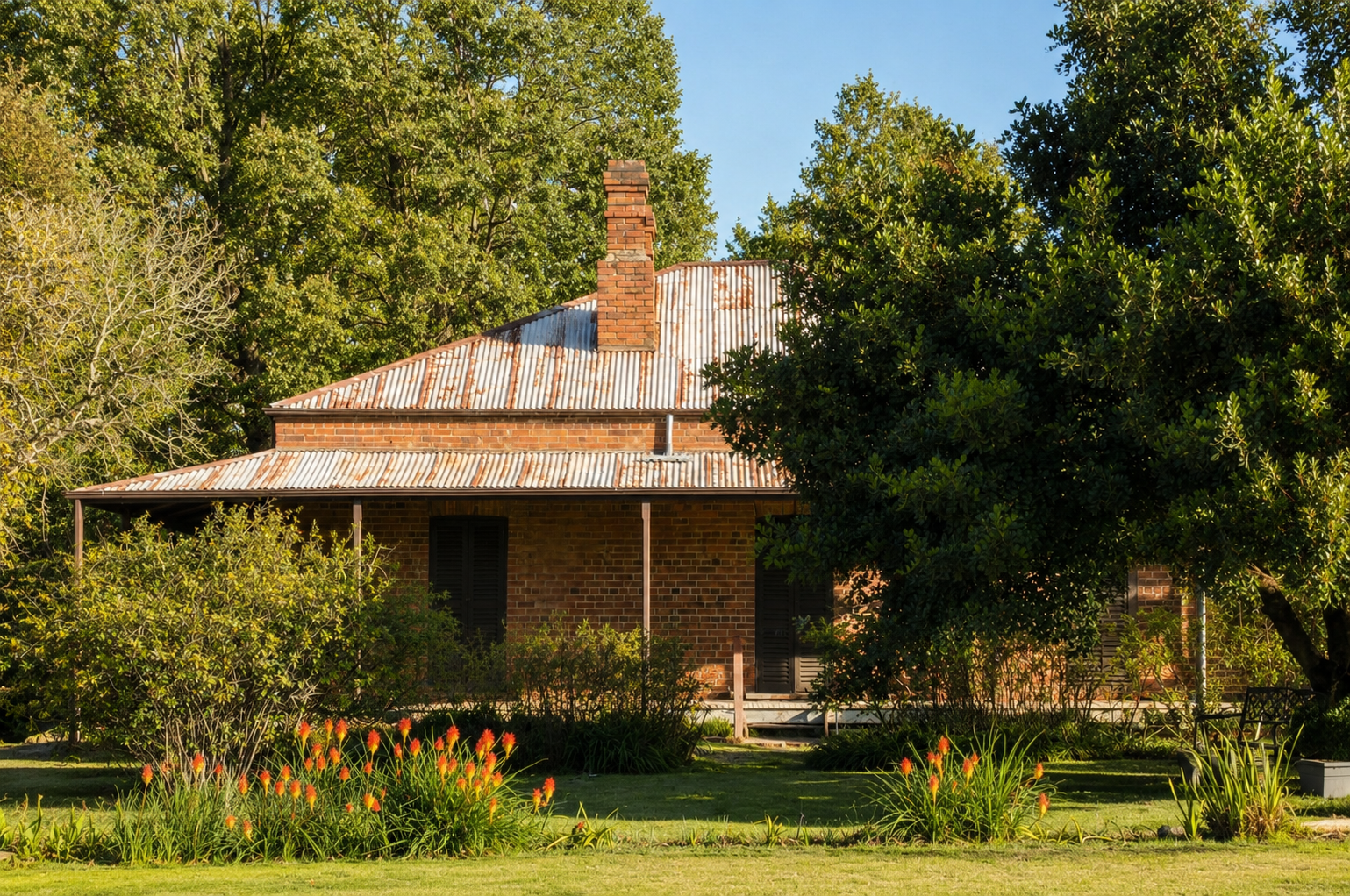
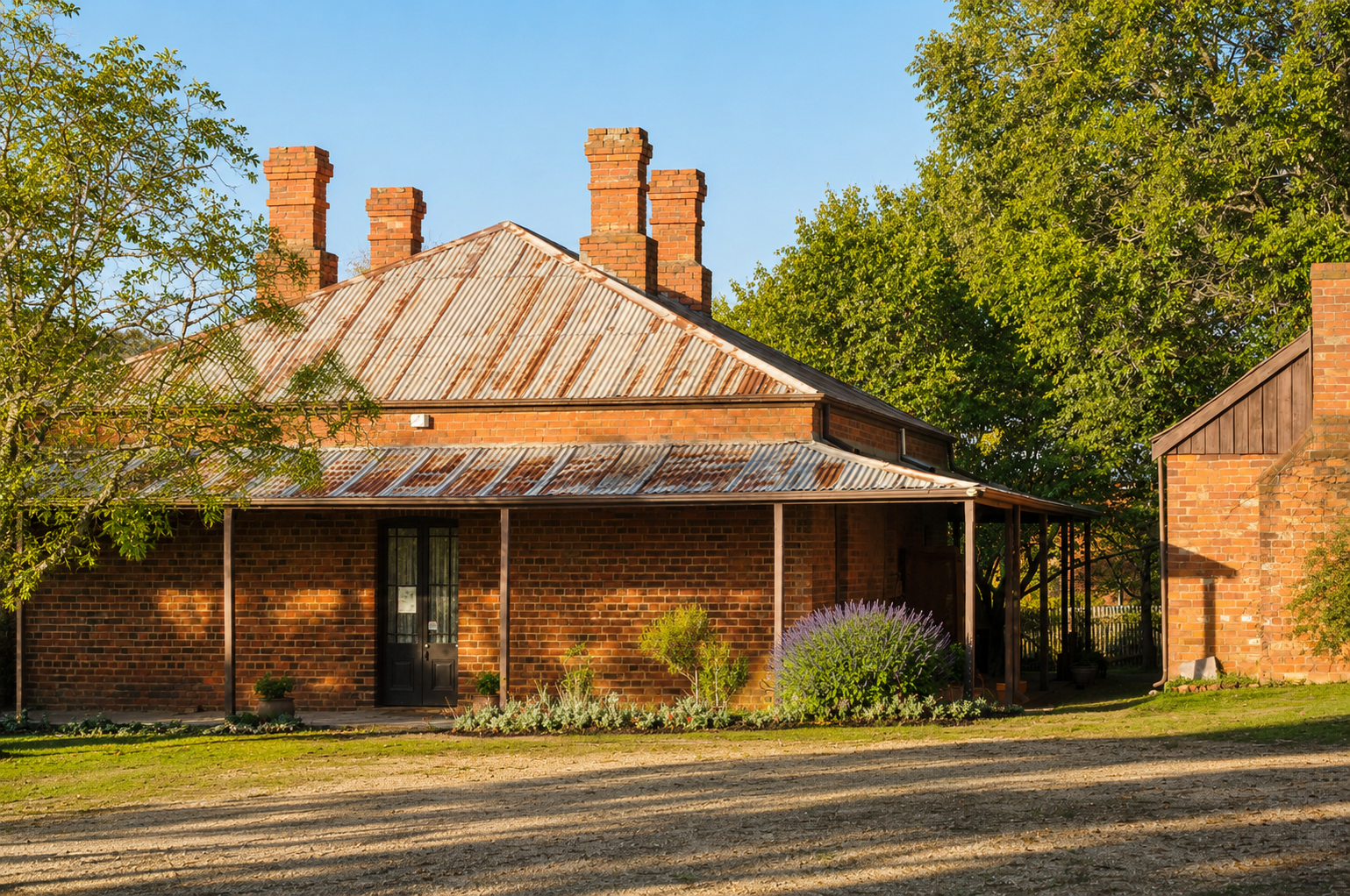
The carpark is on the west, which is the wrong side unless you were a patient. The entry is marked by a stained glass door on the east. Coming in from the west you get brick paving below the verandah roof and you feel the house is turned away from you. The room on that side was the doctor's consulting room. The guide told me there's a ghost in it. The Richardson family were into spiritualism and the occult, so perhaps that's fitting.
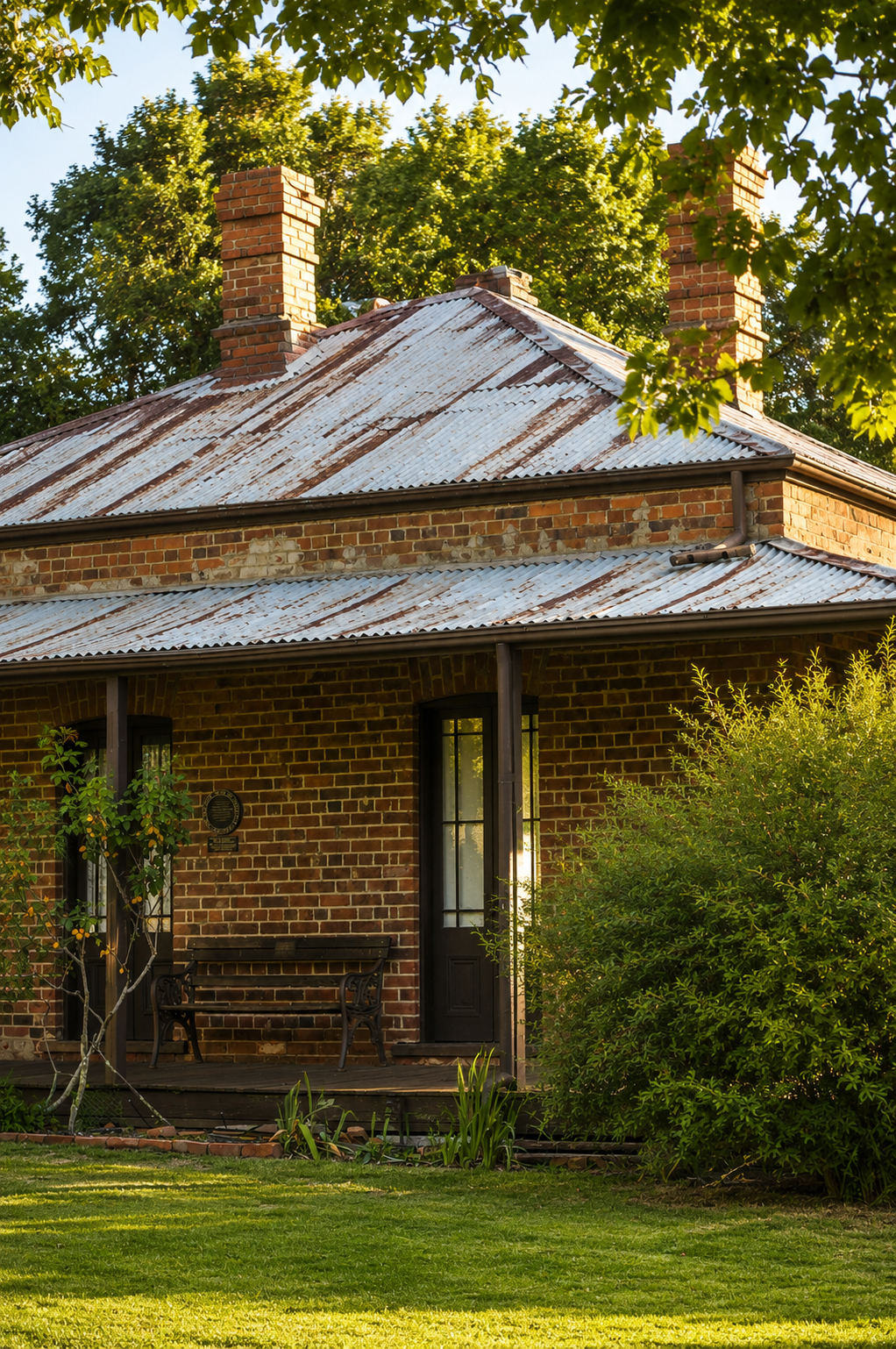
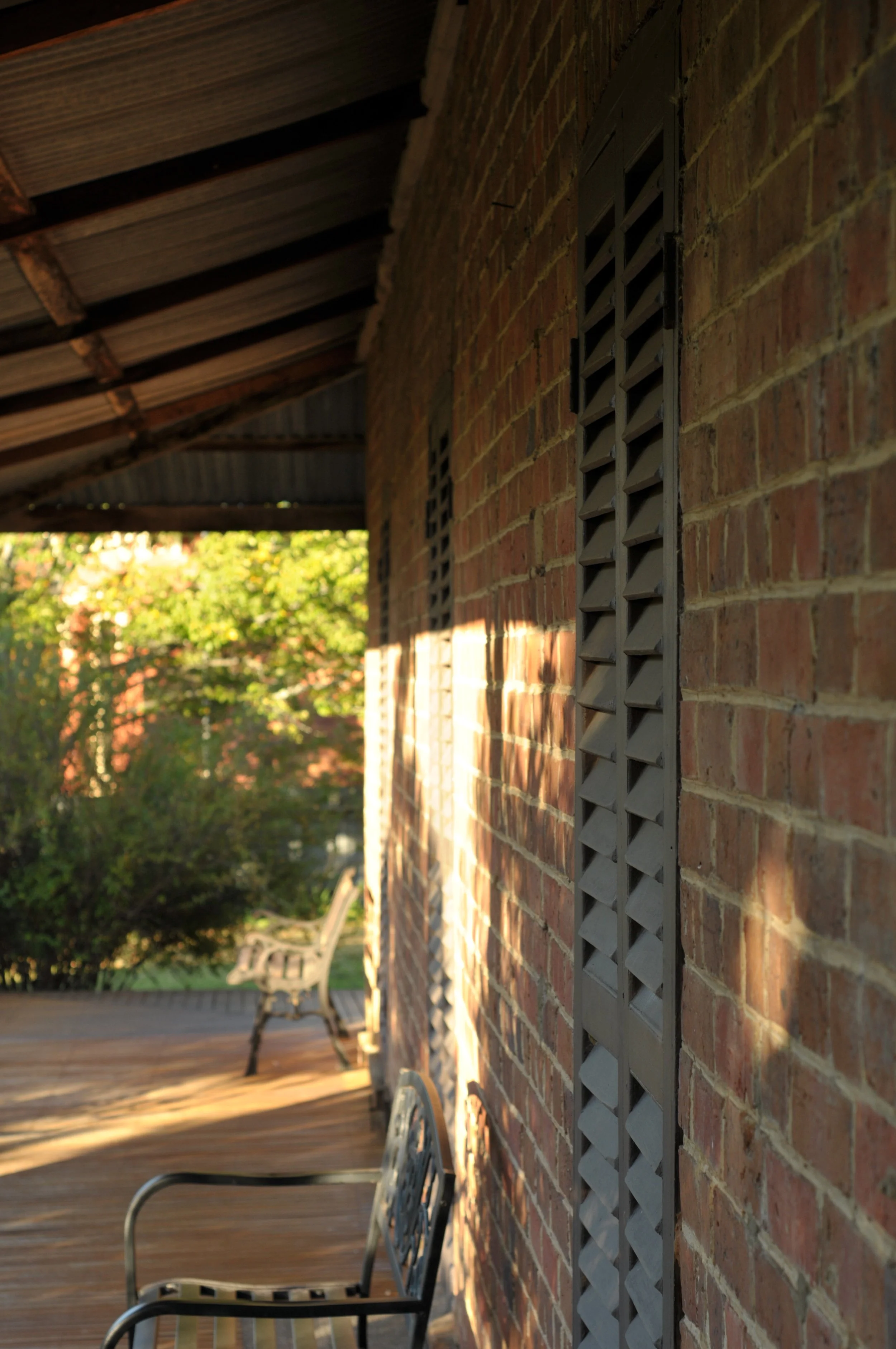
The house is brick, dating from around 1870. Built for a local woman. Four chimneys dominate the roofline. The bricks are not quite red, more terracotta, darker bricks mixed through, laid in English bond. The roofing sheets have rusted at the edges and laps, the rust lines marking out the sheet pattern across the roof, matching the brick colouring. French windows with shutters face north and wrap to the east. The west has a single door. The south, two standard windows and a door. The timber boards of the verandah floor have greyed, a flaking yellow stain over them, the grain and the view beyond both pulling you away from the house. The verandah posts are slender, undecorated timber. The verandah runs all the way around, brick paving on three sides, timber only at the north where the French windows open to the lake.
Inside it was cool. Brick walls, high ceilings, cross ventilation through the French windows. Outside was nearly forty degrees. Inside was another matter.
All rooms open to a narrow central hall. The dining room doubled as a surgery and schoolroom. Part of the south verandah has been enclosed at some point for a bathroom. All that remains is a painted section of wall, a different colour to everything around it. On the brick walls, small s-shaped catches for holding the timber shutters open. Someone made those, or had them made. They are neat, rusting and still there.
One room holds the author's desk and a few belongings. The rest is dressed with collected ephemera, furniture and objects assembled from elsewhere. It reads as a home of quiet prosperity. It probably never was.
Ethel Florence Richardson lived at Lake View from July 1876 to 1877, a brief period she recalled with remarkable clarity. She would write later under the name Henry Handel Richardson. In Myself When Young she writes that she liked the house because all its windows were French windows and usually stood wide open, and for the verandah running all the way around. Richardson's family had moved from a substantial house in Hawthorn. Her father was mentally ill. Here the walls would have felt thin, not because they were, but because everything else had changed. She writes that nerves frayed by heat and anxiety often escaped control. Nothing stayed contained. Sound, movement, heat, all of it moving through the house. It likely brought snakes too, from the adjacent lake.
In Ultima Thule Cuffy wanders barefoot at dawn through what feels like an endless sequence of doors. "It had nothing but doors; which spelt freedom: even the windows were doors… You could run out of any of the windows and tear round the verandah." He knew the house through movement. A child's plan.
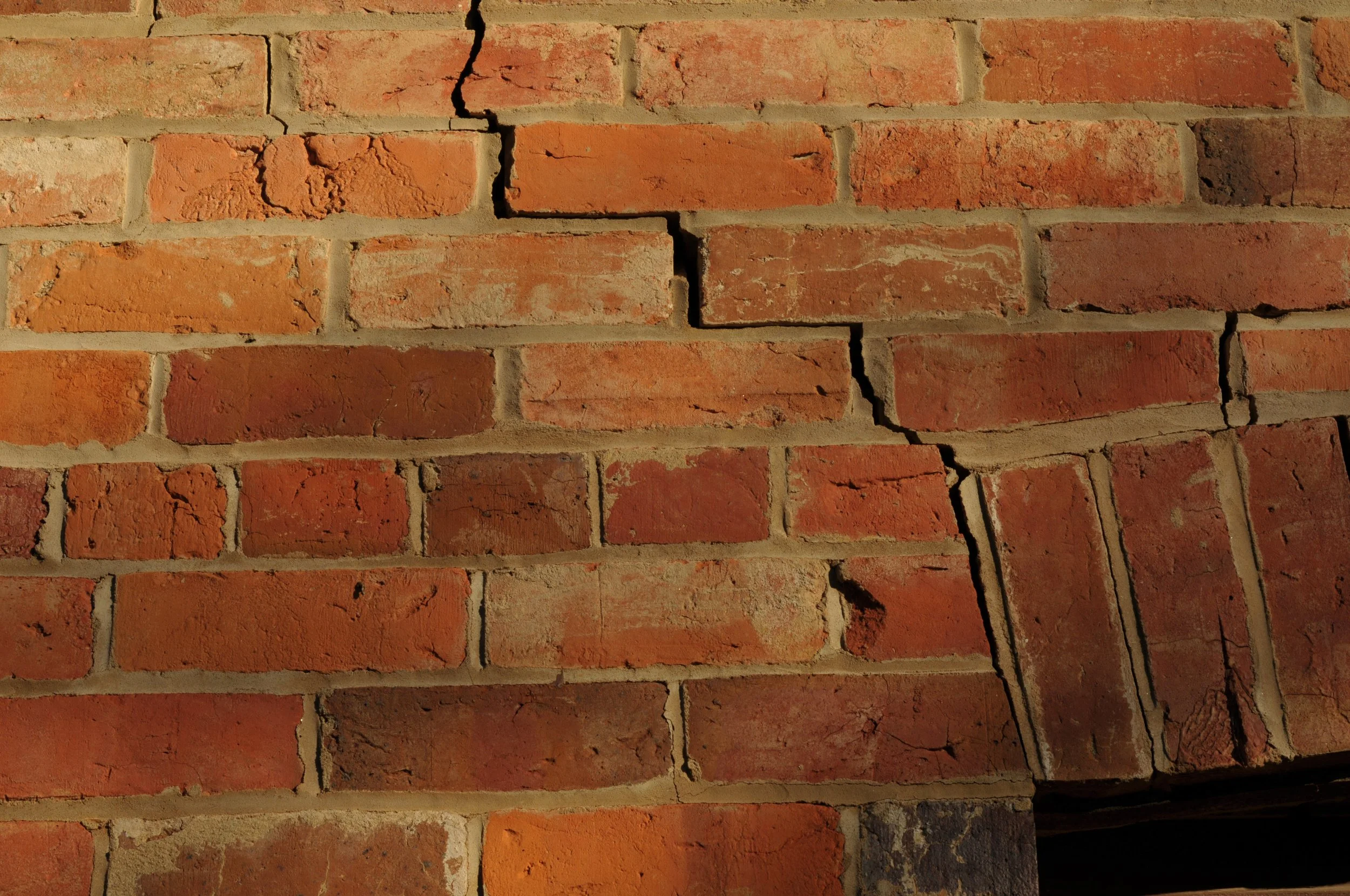
Mary, the mother, noticed the long walk to the kitchen, the limited water supply, the heat that lingered. She recognised the privacy too, and the shade. I walked to the kitchen. You step up into it. The floor is brick by the stove, timber elsewhere, the timber section over a cellar below. No ceiling lining, just corrugated iron and roof timbers, blackened with soot. The brickwork walls are cracked, light coming through the gaps. The guide told me meals were walked from here to a hatch into the dining room of the main house. There is no evidence of it now. The wash house, the outhouse, the bathroom are gone. The kitchen remains, just. There wasn't much to like. Neglect and lack of money have done their work.
I was standing in a building Richardson described from memory nearly fifty years after she left it. Ultima Thule was published in 1926, a hundred years ago. The dry lake. The verandah. The doors opening onto it. The coolness inside against the heat pressing in from every direction.